In the high-stakes real estate market, a property’s first online impression is its most crucial audition. Potential buyers form an opinion in seconds, swiping past listings that fail to capture their imagination. This is precisely where the strategic power of professional presentation comes into play; the visual contrast in staging homes before and after is often the deciding factor that translates a click into a showing. A well-staged property doesn't just look better, it helps buyers emotionally connect and visualize themselves living in the space.
This article moves beyond generic success stories to deliver a tactical playbook. We will dissect eight distinct, real-world staging transformations, from cluttered living rooms to barren outdoor spaces. Each example provides a detailed breakdown of the specific staging decisions made, the measurable impact on key sales metrics like days on market and final offer price, and actionable takeaways you can immediately implement.
Our goal is to equip you with replicable strategies that drive tangible results. For real estate professionals seeking to optimize this critical process, we will also demonstrate how AI-driven tools can be used to execute these very concepts, creating stunning, cost-effective virtual staging that captures buyer attention and accelerates the sales cycle. Let's explore the transformations that turn a listing into a must-see property.
1. Living Room Decluttering & Light Enhancement Transformation
The living room is often the first interior space a potential buyer sees, making its first impression critical. This classic staging technique focuses on two core principles: decluttering to create a sense of spaciousness and enhancing light to make the room feel bright, airy, and inviting. The goal is to remove personal items and excess furniture, allowing buyers to envision themselves in the space without distraction. A successful transformation showcases the room's best features, not the seller's belongings.
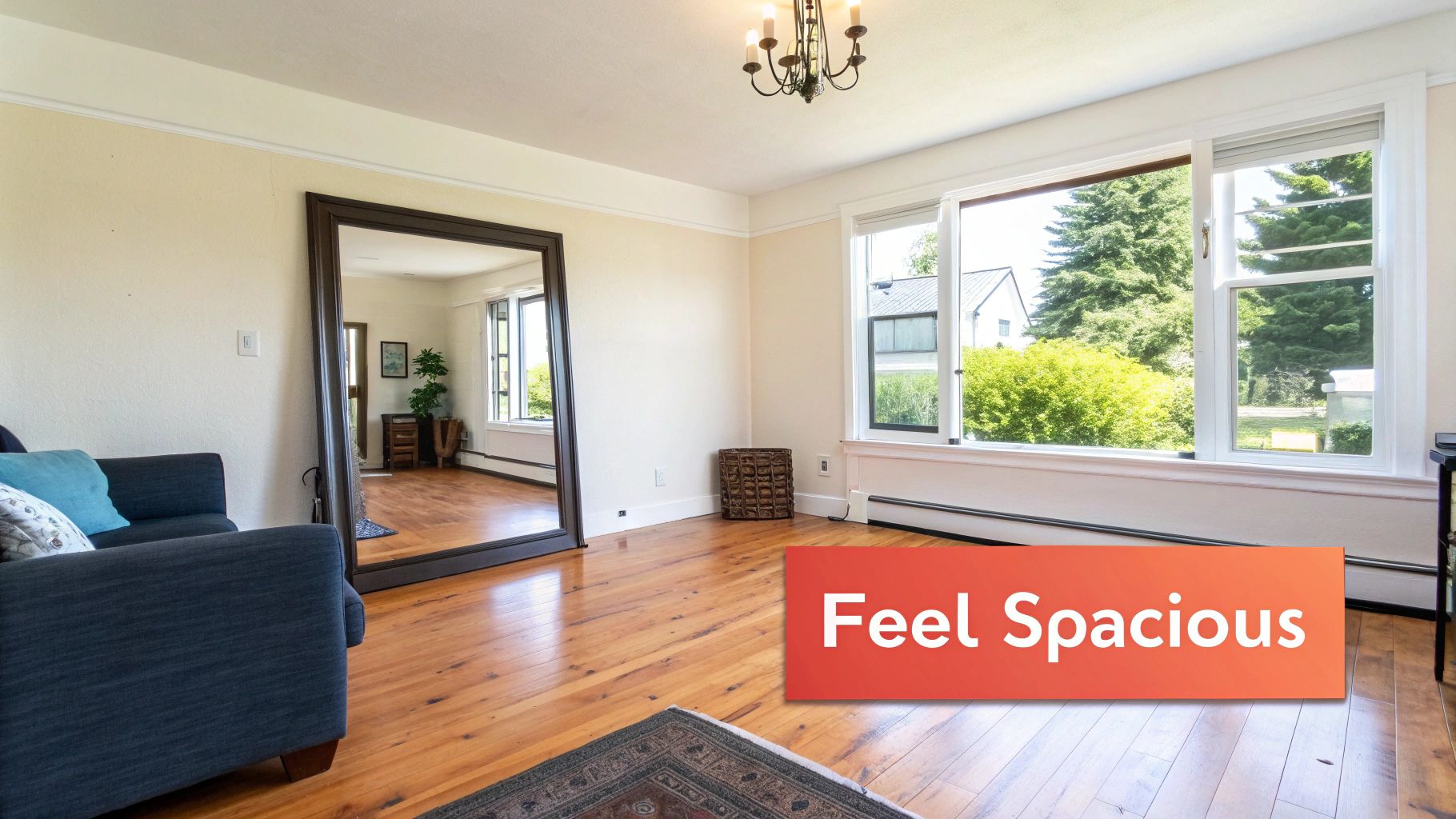
This strategy is one of the most effective examples of staging homes before and after because it directly impacts buyer psychology. Research from the Virtual Staging Association has shown that properly decluttered and staged homes can command a price premium of up to 12%. By clearing out 30-50% of furniture and personal effects, you create clear pathways and highlight the room's architectural assets, like large windows or a fireplace.
Strategic Breakdown & Insights
The power of this method lies in its simplicity and high return on investment. It's less about expensive renovations and more about strategic subtraction.
Key Strategy: The primary objective is to sell space and potential, not furniture. Every item left in the room should serve a distinct purpose in defining the area's function or enhancing its perceived size.
This approach is particularly effective for small or crowded living rooms where creating an illusion of space is paramount. After the physical decluttering is complete, professional photography is essential. You can further refine these images with AI real estate photo editing tools, which can correct lighting, enhance colors, and ensure every shot is picture-perfect for online listings.
How-To: Replicable Tips
You can implement this high-impact strategy with a systematic approach:
- Remove Personal Items First: Start by boxing up all family photos, collections, and personal trinkets. This is the fastest way to depersonalize the space.
- Apply the 'Rule of Thirds': Arrange remaining furniture into functional, visually appealing groupings. Avoid pushing all furniture against the walls, which can make a room feel smaller.
- Maximize Natural Light: Place large mirrors directly opposite windows to reflect light and create depth. Ensure window treatments are minimal and pulled back.
- Update Key Furnishings: If a sofa or armchair looks dated, a quick fix can make a world of difference. For budget-friendly yet impactful changes, consider how a simple solution like choosing the perfect fitted sofa slipcover for a complete room transformation can modernize the entire space without the cost of new furniture.
2. Kitchen Modernization & Counter Space Revelation
The kitchen is often called the heart of the home, and its condition can heavily influence a buyer's decision. This staging technique centers on two high-impact goals: modernizing the aesthetic to appeal to current tastes and revealing maximum counter space to showcase functionality. The objective is to present a clean, bright, and spacious kitchen where buyers can easily envision themselves cooking and entertaining. A successful kitchen transformation moves the focus from the seller's daily life to the room's potential and value.
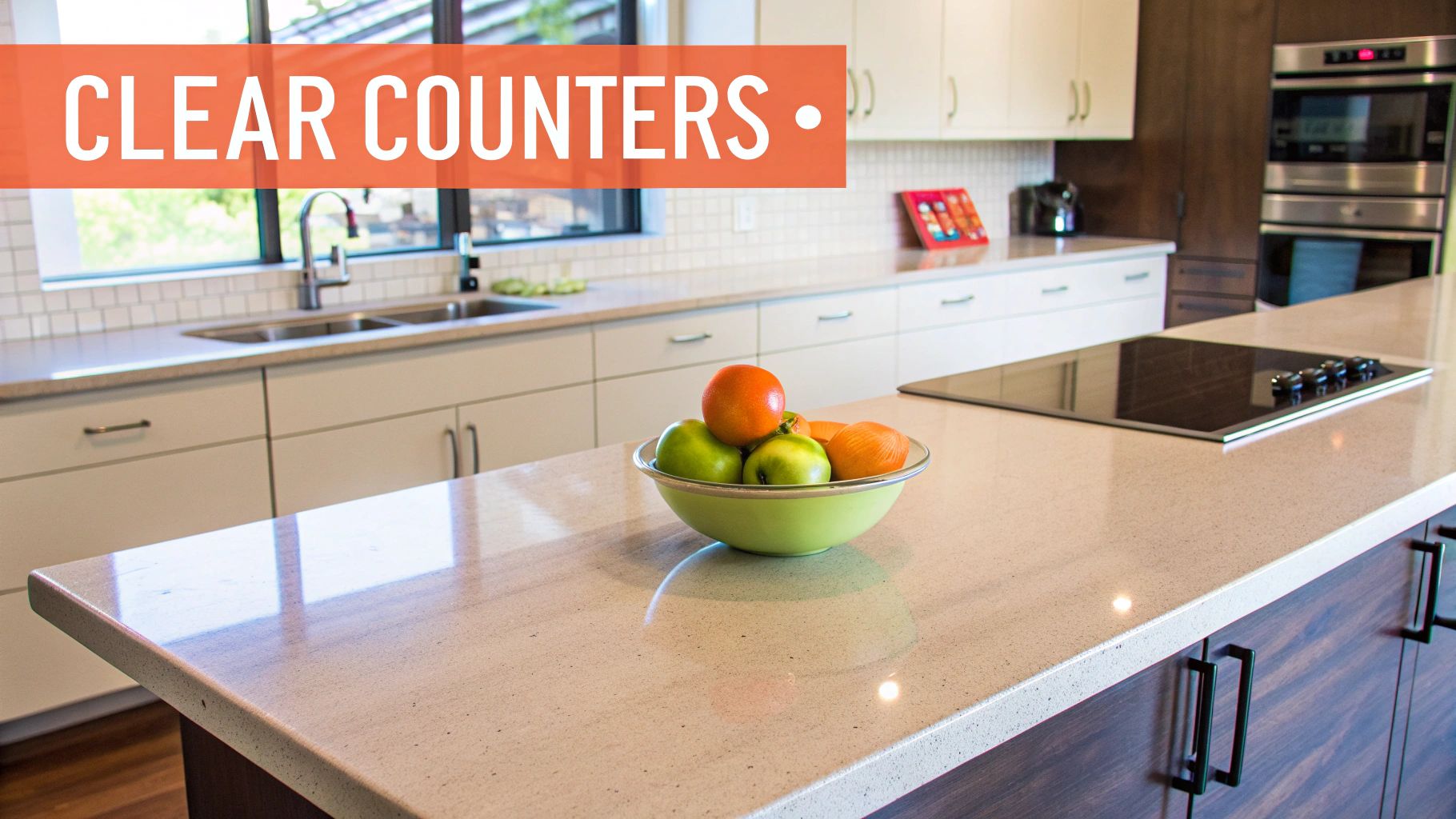
This method is one of the most powerful examples of staging homes before and after because it delivers a significant return on investment. The National Association of REALTORS® consistently reports that kitchen upgrades are a top priority for buyers. Even minor cosmetic updates can create an impression of a well-maintained home, and Zillow has featured kitchen staging transformations that contributed to price increases of over 25%. Clearing 80% of items from countertops immediately makes the kitchen look larger and more usable.
Strategic Breakdown & Insights
The effectiveness of this strategy comes from its direct appeal to a buyer's primary desires: a functional, updated, and move-in-ready kitchen. It’s less about a full-scale renovation and more about smart, visual enhancements.
Key Strategy: The goal is to sell a lifestyle of effortless cooking and clean living. Every visible surface should communicate cleanliness, space, and modern functionality, minimizing any hint of clutter or outdatedness.
This approach is crucial for homes with older or smaller kitchens, as it can overcome buyer objections without requiring a major remodel. After staging, high-quality photos are non-negotiable. Using AI photo editing can enhance brightness, correct colors, and ensure stainless steel appliances gleam in every online listing, capturing buyer attention instantly.
How-To: Replicable Tips
You can execute this high-ROI kitchen staging with a few targeted actions:
- Implement a Strict Countertop Policy: Remove nearly everything. Keep only 3-4 stylish, intentional items like a bowl of fresh lemons, a modern cookbook on a stand, or a small plant.
- Focus on Finishes: If the budget is tight, updating cabinet hardware to a modern matte black or brushed gold is a quick and inexpensive way to transform the room's look.
- Maximize Shine and Light: Thoroughly clean all surfaces, especially stainless steel appliances. Ensure all light bulbs are bright, daylight-rated LEDs to make the space feel luminous.
- Add a Pop of Life: A simple vase of fresh flowers or a bowl of vibrant fruit provides a focal point and adds a touch of color and warmth, making the kitchen feel welcoming.
3. Master Bedroom Sanctuary Conversion
The master bedroom is a deeply personal space, but for a sale, it must be transformed into a universal retreat. This staging technique converts a cluttered, lived-in bedroom into a serene, hotel-like sanctuary. The strategy involves depersonalizing the space and introducing elements that evoke feelings of peace and relaxation, such as calming colors, luxurious bedding, and uncluttered surfaces. The goal is to make potential buyers feel like they are stepping into a tranquil escape, helping them emotionally connect with the home.
This method is a critical part of staging homes before and after because it targets a key emotional trigger for buyers: the desire for a private, restful haven. According to luxury staging firms like Sage Staging, a bedroom that feels like a high-end suite can significantly elevate the perceived value of the entire property. Well-staged master bedrooms can directly impact a buyer's decision, often leading to higher offers as they envision the lifestyle associated with the space.
Strategic Breakdown & Insights
The success of a bedroom sanctuary conversion lies in its ability to sell an experience rather than just a room. It shifts the focus from a functional sleeping area to a luxurious and restorative environment.
Key Strategy: The primary objective is to create an emotional response of calm and comfort. Every element, from the bedding to the lighting, should contribute to a cohesive atmosphere of sophisticated tranquility.
This approach is highly effective for any master bedroom, but especially those that are small, oddly shaped, or lack strong architectural features. By creating a powerful focal point with the bed and using a disciplined color palette, you can distract from the room's shortcomings and highlight its potential as a peaceful retreat.
How-To: Replicable Tips
You can replicate this spa-like transformation by focusing on a few high-impact details:
- Establish a Focal Point: Position the bed so it is the first thing seen upon entering the room. Use a clean, attractive headboard and symmetrical nightstands with matching lamps to create a strong, balanced visual anchor.
- Invest in Luxury Bedding: Use high-quality, neutral-toned bedding. Crisp whites, soft grays, or warm taupes work best. Layer a duvet, a folded throw blanket, and two to three tastefully chosen throw pillows to create a plush, inviting look.
- Declutter Aggressively: Remove at least 70% of the furniture and all personal items. Closets should be half-empty to showcase storage space. Leave only essential furniture: the bed, two nightstands, and perhaps a single dresser or a small seating area.
- Soften the Lighting: Avoid harsh overhead lights. Instead, use warm, soft light from bedside lamps to create an intimate and relaxing ambiance that photographs well and feels inviting during showings.
4. Small Space/Apartment Maximization Through Strategic Furniture Placement
In urban markets where square footage comes at a premium, maximizing small spaces is not just a technique; it's a necessity. This staging strategy focuses on creating the illusion of a larger, more functional area within a compact footprint. The transformation involves strategic furniture placement, the use of vertical space, and multipurpose pieces to turn a cramped studio or small apartment into an airy, desirable home. The goal is to demonstrate that a smaller space doesn't mean sacrificing lifestyle or comfort.
This method is a powerful example of staging homes before and after, particularly in high-density cities like New York or San Francisco. By proving the livability of a small apartment, stagers can significantly increase its appeal and perceived value. The key is shifting a buyer's perspective from seeing limitations to seeing a smart, efficient, and stylish living solution. A cluttered "before" photo might deter buyers, while a thoughtfully arranged "after" can make the exact same space feel open and highly functional.
Strategic Breakdown & Insights
The effectiveness of this method comes from its psychological impact on potential buyers. It preemptively answers their biggest question: "Can I actually live here comfortably?"
Key Strategy: The primary objective is to define distinct functional zones (living, dining, sleeping) within a single small space, using furniture and visual cues to create an intuitive and spacious flow.
This approach is crucial for any listing under 800 square feet. It's about demonstrating potential and proving that every inch has a purpose. After staging, use professional photography with a wide-angle lens to capture the newfound sense of space, and enhance the images with AI-powered tools to ensure perfect lighting and clarity in online listings.
How-To: Replicable Tips
You can transform a small space by focusing on smart, space-enhancing choices:
- Choose Furniture on Legs: Select sofas, chairs, and tables with visible legs. This creates negative space underneath, allowing light and air to flow, which makes the room feel larger.
- Draw the Eye Upward: Use tall, narrow, floor-to-ceiling shelving or a single piece of striking vertical art to emphasize the room's height, making it feel less compressed.
- Place Mirrors Strategically: A large mirror placed directly opposite a window is a classic trick. It doubles the natural light and creates a powerful illusion of depth.
- Establish a Consistent Color Palette: Use light, neutral colors for walls and major furniture pieces. This creates a cohesive, uncluttered look that expands the space visually.
5. Outdoor Space & Curb Appeal Transformation
The exterior is the very first impression a property makes, and its impact is monumental. This staging strategy focuses on transforming curb appeal through landscaping, cleaning, and thoughtful arrangement of outdoor elements. The goal is to create an immediate sense of welcome, care, and value before a buyer even steps inside. A well-staged exterior signals that the entire property has been meticulously maintained, setting a positive tone for the rest of the viewing.
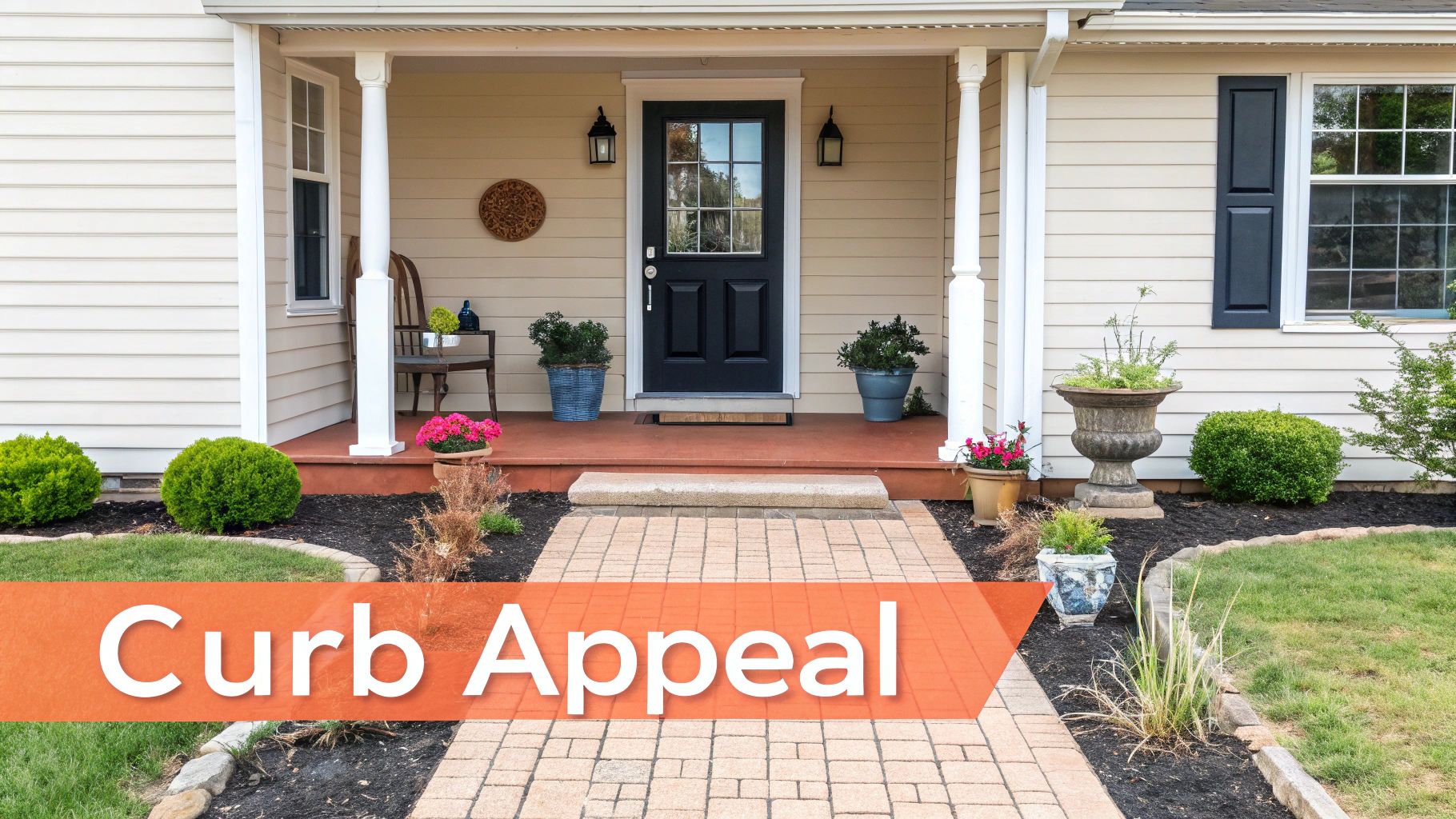
This is one of the most crucial examples of staging homes before and after because it directly influences a buyer's initial perception. According to the National Association of Realtors®, strong curb appeal can increase a property's value by up to 10%. A few days of dedicated outdoor work, from power washing to adding fresh mulch, can completely redefine a home's online and in-person presence, often generating more interest and higher offers.
Strategic Breakdown & Insights
The power of curb appeal lies in its psychological effect. A beautiful exterior makes buyers excited to see the interior and more forgiving of minor indoor imperfections. It frames the entire property as a desirable asset.
Key Strategy: The primary objective is to sell an inviting lifestyle and pride of ownership from the moment a buyer arrives. Every element, from the front door to the flower beds, should contribute to a cohesive and attractive first impression.
This approach is essential for any property, but it is especially critical for homes that may have a less impressive interior or are located in highly competitive neighborhoods. After staging, it's vital that your visuals do it justice; you can learn more about how to capture these improvements with expert real estate photography tips.
How-To: Replicable Tips
You can achieve a high-impact curb appeal transformation with a focused, step-by-step plan:
- Clean and Clear First: Begin by removing all dead vegetation, weeds, and debris. Power wash the siding, driveway, and walkways to instantly brighten the property.
- Add Pops of Color: Paint the front door an attractive, welcoming color that complements the home's exterior. Add colorful, seasonal potted plants near the entrance for an immediate visual lift.
- Refresh Landscaping: Lay down a fresh layer of mulch in all garden beds. Trim overgrown shrubs and trees to ensure they frame the house rather than obscure it.
- Stage Outdoor Living: If there is a porch or patio, arrange simple, clean outdoor furniture to showcase the potential for outdoor living and relaxation.
6. Bathroom Renovation & Cleanliness Emphasis
Second only to the kitchen in importance, a bathroom can significantly influence a buyer's perception of a home's overall maintenance and value. This staging strategy focuses on transforming a functional, often cluttered, bathroom into a spa-like retreat through deep cleaning, minor renovations, and strategic organization. The goal is to present a pristine, relaxing environment that feels both luxurious and impeccably maintained, signaling to buyers that the home has been well cared for.
This transformation is a powerful example of staging homes before and after because it addresses a key emotional trigger for buyers: cleanliness and comfort. According to a Zillow report, bathroom remodels consistently offer one of the highest returns on investment. Even small updates, like replacing dated fixtures or re-grouting tile, can make the space feel new and significantly boost buyer confidence, often leading to quicker offers and a stronger final sale price.
Strategic Breakdown & Insights
The effectiveness of this method comes from its ability to create a high-end feel without requiring a full-gut renovation. It targets the most visible and impactful elements of the space.
Key Strategy: The objective is to sell a lifestyle of cleanliness, relaxation, and order. Every element, from the towels to the faucets, should contribute to a cohesive, serene aesthetic that feels more like a hotel than a heavily used family bathroom.
This approach is crucial for homes with older or smaller bathrooms. By maximizing light, creating clean lines, and removing all personal clutter, even a compact bathroom can feel spacious and luxurious. Beyond major renovations, maintaining a sparkling clean appearance is vital; this includes following detailed guides on how to clean glass shower doors for a lasting sparkle to ensure every surface is flawless for photos and viewings.
How-To: Replicable Tips
You can execute this high-impact bathroom staging with a targeted checklist:
- Deep Clean and Declutter: Remove every personal item from countertops, the shower, and shelves. Scrub grout lines, polish fixtures, and ensure all glass and mirrors are spotless.
- Create a Spa Vibe: Roll three to four plush, high-quality white towels and place them in a basket or on a clean shelf. Add a small, simple accessory like a new soap dispenser.
- Incorporate Natural Elements: Place a small, humidity-loving plant like an orchid or a snake plant on the vanity or a shelf to add a touch of life and color.
- Upgrade Hardware and Lighting: If the budget allows, replace builder-grade faucets, cabinet pulls, and light fixtures with modern, stylish alternatives. Ensure lighting is bright, even, and flattering.
7. Empty Home Full-Property Virtual Staging Transformation
A vacant home presents a major challenge for buyers, who often struggle to visualize the scale, function, and potential of an empty space. This powerful staging technique uses digital technology to furnish and decorate an empty property, transforming blank photos into a fully realized home. The goal is to show buyers exactly how each room could be used, helping them emotionally connect with the property and see its true potential without the high cost and logistical hurdles of physical staging.
This modern approach is one of the most compelling examples of staging homes before and after, especially for new constructions, investor flips, and vacant listings. According to research from the Virtual Staging Association, digitally staged homes can sell up to 73% faster and for a higher price. By digitally adding furniture, art, and decor, you provide context and a lifestyle narrative that empty rooms simply cannot convey on their own.
Strategic Breakdown & Insights
The advantage of virtual staging lies in its cost-effectiveness, speed, and versatility. It allows agents to showcase a property to its fullest potential online, where over 95% of buyers begin their search.
Key Strategy: The primary objective is to eliminate the buyer's guesswork. By showing a fully furnished space, you answer questions about furniture placement and room function before they are even asked, accelerating the decision-making process.
This method is particularly effective for marketing properties that are difficult to access or are located in different geographic areas. It allows for limitless design variations to appeal to different buyer demographics without any physical labor, making it a highly efficient marketing tool. For those exploring this technology, it's beneficial to research the best virtual staging software options available to find a platform that matches your needs for quality and realism.
How-To: Replicable Tips
You can leverage virtual staging to make any empty listing stand out with a few key steps:
- Start with High-Quality Photos: The final result is only as good as the initial image. Hire a professional real estate photographer to capture crisp, well-lit photos of the empty rooms.
- Match Style to the Target Buyer: Select a furniture and decor style that aligns with the property's architecture and the likely demographic of your target buyer (e.g., modern for a downtown condo, transitional for a suburban family home).
- Ensure Realistic Scale and Proportions: Work with a reputable service or software that pays close attention to the scale of the digital furniture. Unrealistic proportions can make the staging look fake and break the buyer's immersion.
- Disclose, Disclose, Disclose: Always include a clear disclaimer in the photo description or on the image itself stating that the room has been "virtually staged." Transparency is crucial for building trust with potential buyers.
8. Basement & Bonus Room Functional Space Revelation
Basements and bonus rooms are often underutilized spaces, frequently serving as disorganized storage areas. This staging technique focuses on transforming these dark, cluttered areas into defined, functional living spaces. The core principle is to demonstrate a clear purpose, such as a home office, recreation room, or guest suite, unlocking hidden value for potential buyers. By cleaning, decluttering, and strategically adding light and minimal furniture, you reveal the room's true potential.
This transformation is a powerful example of staging homes before and after, as it directly addresses the growing demand for flexible living areas. With the rise of remote work, a well-staged home office can significantly increase a property's appeal. Real estate data suggests that staging a bonus space can add a perceived value of 5-8% by helping buyers visualize how they could use the extra square footage, turning a liability into a major selling point.
Strategic Breakdown & Insights
The power of this method lies in manufacturing value from a previously overlooked area. It's not about expensive finishing but about showcasing possibility through intelligent staging.
Key Strategy: The primary objective is to assign a clear, desirable function to an ambiguous space. Buyers rarely have the vision to see past clutter; your job is to show them exactly how this bonus room enhances their lifestyle.
This approach is highly effective for properties with unfinished or partially finished basements and oddly shaped bonus rooms. By defining the space, you preemptively answer the buyer's question of "What would I do with this room?" and add tangible, usable square footage to their mental calculation of the home's value.
How-To: Replicable Tips
You can implement this high-impact strategy by focusing on clarity and function:
- Define a Single, Clear Purpose: Choose one function (office, gym, playroom) and stage it decisively. Avoid a cluttered, multi-purpose look.
- Remove 90% of Stored Items: Be ruthless with decluttering. The goal is to show off the space, not the seller's stored belongings. Renting a small, temporary storage unit is a worthwhile investment.
- Aggressively Add Lighting: Basements are notoriously dark. Use bright, cool-toned LED bulbs in overhead fixtures and add floor or task lamps to eliminate all shadows and create a welcoming atmosphere.
- Use Light Colors: A fresh coat of light-colored paint (like off-white, light gray, or beige) on the walls will instantly make the space feel larger and brighter.
- Stage for Work-From-Home Appeal: If staging as an office, include a clean desk, an ergonomic chair, good task lighting, and a simple bookshelf. This directly taps into current buyer needs.
Before & After Home Staging: 8-Point Comparison
Your Next Listing's Success Story Starts Here
The journey through these eight distinct transformations reveals a powerful, undeniable truth: strategic staging is the definitive catalyst for real estate success. We've moved beyond simple before-and-after photos and into a new realm of strategic marketing. Each case study, from the light-filled living room to the fully realized basement, underscores a set of core principles that consistently deliver measurable results.
These staging homes before and after examples are not just about aesthetic improvement; they are a masterclass in market psychology. They demonstrate how to remove personal history to make space for a buyer's future aspirations. They show how to define a room's purpose, turning ambiguous areas into functional, desirable features. Most importantly, they prove that a well-staged property doesn't just sell, it sells for more and it sells faster.
The Core Pillars of Staging Success
Looking back at the transformations, three foundational pillars stand out as the non-negotiable elements of any successful staging project:
- Strategic Depersonalization: The first and most critical step is always to declutter and depersonalize. This isn't just about tidying up; it's about creating a blank canvas. By removing family photos, personal collections, and specific decor, you invite potential buyers to mentally move in and project their own lives onto the space.
- Defining and Maximizing Space: Every square foot has a story to tell. An undefined bonus room is a question mark, but a staged home office or play area is a solution. By using furniture and decor to assign a clear purpose to each room, you eliminate buyer confusion and showcase the property's full potential, making it feel larger and more valuable.
- Optimizing Light and Flow: Light creates a sense of openness, cleanliness, and positivity. The most effective staging leverages natural light by removing heavy drapery and strategically places artificial lighting to brighten dark corners. This, combined with furniture arrangements that create clear, intuitive pathways, makes a home feel welcoming and easy to navigate.
From Strategy to Execution: The Modern Agent's Advantage
In the past, executing these strategies was a costly and time-consuming endeavor involving physical labor, furniture rentals, and logistical coordination. While the principles remain timeless, the tools for applying them have been completely revolutionized. The shift from physical to virtual staging isn't just a trend; it's a fundamental change in how top-producing agents prepare and market their listings.
This evolution empowers you to create your own compelling staging homes before and after narratives with unprecedented speed and flexibility. You can now present a single vacant property as a minimalist modern home, a cozy traditional space, and a chic contemporary loft, all without moving a single piece of furniture. This allows you to tailor your marketing to different buyer demographics, test various styles, and ultimately, cast the widest possible net to attract the perfect buyer.
Embracing these modern tools means you are no longer just a real estate agent; you are a marketing visionary for your clients' most valuable assets. By mastering the art and science of staging, you differentiate your services, provide exceptional value, and architect the success stories that build a powerful reputation. The next record-breaking sale, the next thrilled client, the next listing that sells in a weekend-it all begins with the vision you create before the first buyer ever steps through the door.
Ready to create your own stunning before-and-after transformations in minutes? Stop imagining the potential of a listing and start showing it with Bounti Labs. Our AI-powered virtual staging and editing tools give you the power to declutter, restyle, and fully furnish any property with just a few clicks, turning every listing into a must-see home.