Staging a house isn't just about fluffing pillows and hiding the clutter. It’s a strategic process of arranging furniture and decor to make a property connect with the widest possible range of buyers. The goal is simple: help potential buyers mentally move in and see the house as their future home.
When that connection happens, you’re not just selling four walls and a roof; you’re selling a lifestyle. That emotional pull is what leads to stronger offers and faster sales.
Why Home Staging Is a Non-Negotiable Strategy
Let's clear something up: home staging is not an optional, pricey add-on reserved for luxury listings. It's one of the most effective marketing tools in your entire playbook.
You're not trying to hide flaws. You're highlighting a home's best features to create a first impression that sticks. It’s about shifting a buyer’s mindset from seeing "someone else's house" to envisioning "my new home."
That psychological leap is everything. An empty room feels cold and its dimensions are hard to grasp. A cluttered room feels small and stressful. Staging solves both problems by defining each space, showcasing its true potential, and creating a clean, inviting atmosphere that lets buyers breathe.
The Numbers Speak for Themselves
Don't just take my word for it—the data consistently proves staging delivers a real financial return. According to a recent report from the National Association of REALTORS®, 29% of agents said staging led to offer increases of between 1% and 10%.
The impact on your timeline is just as crucial. Nearly half of seller's agents reported that staging significantly decreased the time a home spent on the market. Buyers move faster on homes they can fall in love with.
To really drive this home, let’s look at the direct financial impact of choosing to stage versus leaving a property as-is.
The Financial Impact of Staging vs. Not Staging
The decision to stage isn't just about aesthetics; it's a calculated business move that protects your client's equity. The alternative is often a price reduction, which can cost far more than the initial investment in staging.
As the table shows, staging is an investment that pays for itself by preventing the need for costly price drops and extended days on market.
"People make a purchase decision based on their feeling about your home. They make a very real, physical decision from a place of pure emotion. Their feeling about the house is the foundation to the rest of the decision."
That quote gets to the heart of it. Staging helps buyers get past the current owner's life and belongings. It creates a clean slate that feels fresh, new, and full of possibility.
Modern Staging AI vs. Traditional Methods
Of course, the benefits are clear, but traditional physical staging can be a logistical headache. It’s expensive, involving furniture rentals and professional fees, and can take weeks to coordinate.
This is where technology changes the game. AI-powered tools now let you get stunning, professional results virtually. You can transform a cluttered, dated, or vacant space into a beautifully staged photo in just a few minutes, right from your laptop.
For a real sense of what’s possible, check out these incredible before and after home staging transformations. This approach makes top-tier staging accessible for every single listing, not just the million-dollar ones. It gives you a serious competitive edge that helps win more listings and grab the attention of serious buyers the second they start scrolling online.
The Pre-Staging Work That Guarantees Results
Before you even think about fluffing pillows or hanging art, the real work of staging begins. This is the unglamorous, foundational stuff that creates a perfect blank canvas. Skipping these steps is like building a house on a shaky foundation—no amount of beautiful decor can hide underlying grime or clutter.
Think of this pre-staging phase as your insurance policy. It guarantees that every dollar and minute you invest in the actual staging, whether it's physical or virtual, delivers the biggest possible punch. You're not just cleaning up; you're transforming a personal home into a pristine, market-ready product.
Declutter Like Your Sale Depends on It
This might be the most effective thing you can do: get rid of 30-50% of what's inside the home. I know it sounds extreme, but it's the secret sauce for making rooms feel larger, brighter, and way more inviting. Buyers need to see the space, not the seller's life story.
Start with every single flat surface. We're talking kitchen and bathroom countertops, dressers, nightstands, and coffee tables. That blender collection and the stack of mail? Pack it all away. Leave just one or two intentional, decorative items behind.
Closets are next, and trust me, buyers will open them. A closet crammed to the gills screams one thing: "not enough storage."
- Aim for 50% Empty: Pull out at least half the items from every closet. This creates an immediate feeling of abundant, luxurious storage.
- Box Up Off-Season Items: If it's summer, pack away the winter coats. Get them off-site if you have to.
- Organize What Remains: Tidy up the shelves and invest in matching hangers. It's a small detail that communicates a well-maintained home.
The goal is to erase any hint of cramped living. When a buyer peeks into a closet and sees breathing room, they instantly feel more confident that their own stuff will fit comfortably.
Depersonalize to Create a Blank Canvas
For a buyer to mentally move in, the current owner has to mentally move out. That means stripping away all the personal touches that made the house a home for the seller. It’s a critical psychological step that many sellers resist, but it’s non-negotiable.
The goal isn't to create a sterile, empty box. It’s to provide a neutral, aspirational backdrop. Buyers should walk in and immediately start imagining their furniture, their photos, and their life filling the space.
A great trick is to create a "hideaway box" for each family member. Right before a showing, they can do a quick sweep and toss in remote controls, phone chargers, and daily paperwork, then tuck the box out of sight.
This process has to be ruthless:
- Family photos on the walls and shelves have to go.
- Kids' artwork on the fridge needs to come down.
- Personal collections, whether it's sports memorabilia or quirky decor, should be packed away.
This simple act of depersonalizing helps a much wider range of buyers connect with the property on an emotional level—and that emotional connection is what drives strong offers.
The payoff for all this prep work is huge, leading directly to a faster sale at a better price.
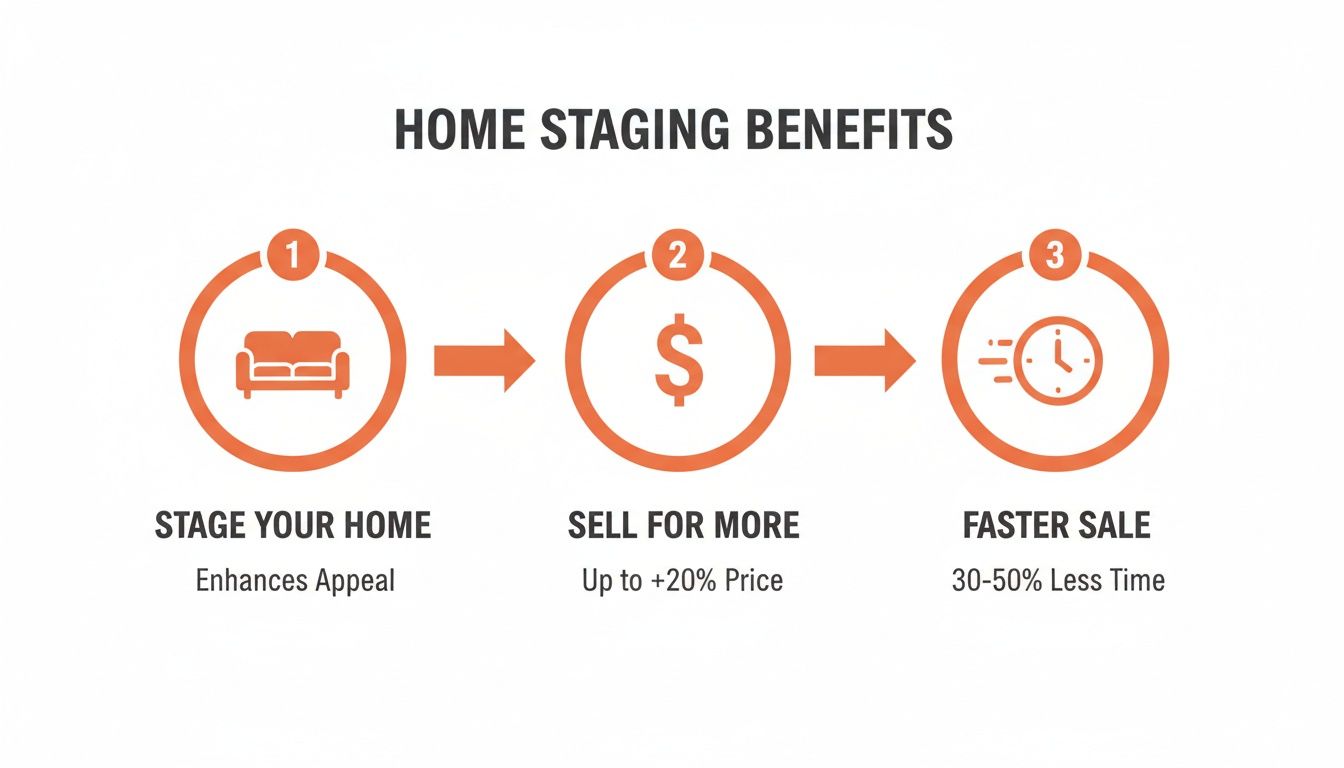
This process makes it clear: proper staging isn't just an expense. It's a strategic investment that pays for itself by speeding up the sales cycle and boosting the final number.
A Pro-Level Deep Clean Checklist
A quick wipe-down isn't going to cut it. The property needs a deep clean that makes it feel almost new. Buyers notice the little things, especially in photos, and a sparkling home signals that the property has been meticulously cared for.
Focus on the spots that often get missed in a regular cleaning:
- Light Fixtures & Ceiling Fans: Dust and grime here are an instant turn-off.
- Baseboards & Trim: Wipe down every single baseboard, door frame, and window sill.
- Window Tracks & Glass: Clean windows inside and out. It’s amazing how much more natural light pours in.
- Grout & Caulk: Scrub the tile grout in kitchens and bathrooms until it’s spotless. If it’s stained or cracked, just re-caulk it.
- Inside Cabinets & Appliances: Oh yes, they will look. Make sure cabinets, drawers, the oven, and the fridge are immaculate.
And don't forget the outside. Knowing the best way to clean your house exterior makes a massive difference in that all-important first impression.
Small Repairs with a Big Impact
Finally, walk through and fix all the little things that make a home feel neglected. Individually they're minor, but together they send a powerful message of quality and care. A buyer who spots a leaky faucet will immediately start wondering what bigger, more expensive problems are hiding.
Hit this list of high-impact fixes:
- Patch and paint over all nail holes.
- Fix any leaky faucets or running toilets.
- Replace burned-out light bulbs. Use matching, warm-white bulbs everywhere for consistency.
- Swap out dated cabinet hardware in the kitchen and bathrooms. It's a cheap, instant facelift.
- Make sure every door and cabinet opens and closes smoothly without a squeak.
These foundational steps—decluttering, depersonalizing, deep cleaning, and repairing—are the essential groundwork. Get this right, and you've created that perfect canvas for a fast sale and a top-dollar offer.
Your Room-by-Room Staging Game Plan
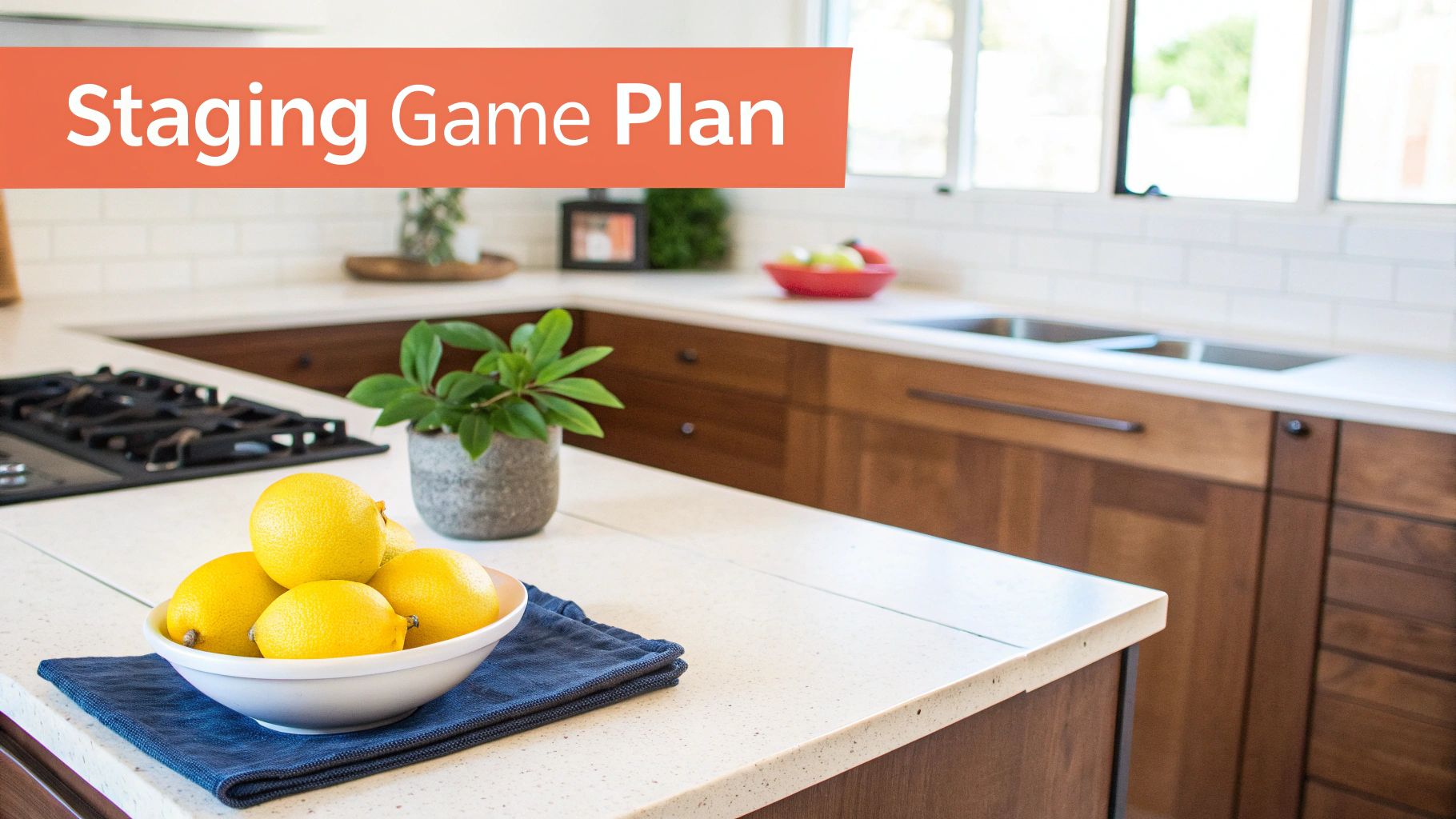
Alright, you’ve got your perfectly clean, depersonalized canvas. Now for the fun part: adding those strategic layers of style that make a house feel like a home. This isn't about a full-blown redecoration. It's about defining each key space so buyers can immediately see themselves living there.
Let’s be honest, not all rooms are created equal in a buyer's mind. We're going to laser-focus on the areas that carry the most emotional weight.
We’ll tackle the highest-impact zones one by one: the living room, primary bedroom, kitchen, and the main bathroom. These are the rooms where buyers linger, where they start mentally arranging their own furniture. Get these spaces right, and you'll create a showing that stands out and sticks with them.
The Living Room: Where Buyers Mentally Settle In
The living room often delivers the first big impression, setting the tone for the entire tour. The goal here is simple: create a space that feels spacious, inviting, and perfect for both unwinding and hosting guests. It has to feel like the true heart of the home.
There’s a reason 37% of agents surveyed by the National Association of Realtors say the living room is the most critical space to stage.
The biggest mistake people make is pushing all the furniture against the walls. Pull your sofa and chairs even a few inches away from the wall—it instantly creates a sense of airiness and flow.
- Create Conversational Zones: Arrange seating to face each other, not just the TV. A sofa paired with two accent chairs around a coffee table is a classic setup that just works.
- Define with a Rug: Use a properly sized area rug to anchor the seating area. You want at least the front legs of all the main furniture pieces sitting on the rug. It pulls everything together.
- Add Soft Textures: A couple of neutral throw pillows and a neatly folded blanket are all it takes. These small touches make a room feel cozy and lived-in, not sterile.
- Mind the Focal Point: Every room has one—a fireplace, a big window, or cool built-ins. Arrange your furniture to highlight it, not compete with it.
If a piece of furniture feels too big or doesn't have a clear purpose, get it out of there. When it comes to staging, less is almost always more.
The Primary Bedroom: A Serene Escape
Buyers are looking for a primary bedroom that feels like a genuine retreat. This room needs to scream rest and relaxation. A cluttered, cramped bedroom sends the wrong signal entirely, suggesting the home just doesn't have enough private space.
The bed is the absolute star of this show. Make it look like something out of a boutique hotel. A small investment in crisp, white, or soft neutral bedding pays for itself.
Staging the primary bedroom is vital because it's where buyers envision their personal sanctuary. It's not just a room; it's the space where they will start and end their days. Making it feel like a tranquil haven is a powerful selling tool.
Follow these steps for that five-star hotel vibe:
- Symmetrical Setup: Flank the bed with two matching nightstands and lamps. Our brains love symmetry; it creates an immediate sense of calm and order.
- Minimalist Surfaces: Keep those nightstands clear. A lamp and maybe a single small book or plant are all you need. No charging cables, no water glasses.
- Show Off Storage: Just like with every other closet, make sure the primary closet is only 25-50% full. Buyers will look, and seeing organized, open space assures them there's plenty of room.
- Let There Be Light: Open all the blinds and curtains. If you need privacy, swap heavy drapes for simple sheer white curtains that let light filter through.
Get rid of any bulky furniture that makes the room feel tight, like oversized dressers or armoires. Your goal is to highlight the square footage, not just fill it up.
The Kitchen: The True Heart of the Home
You've heard it a million times because it's true: kitchens sell houses. Buyers dissect this space more than any other, picturing holiday dinners and Tuesday night homework sessions at the island. A well-staged kitchen has to feel clean, functional, and spacious.
Rule number one? Clear the countertops. Nothing shrinks a kitchen faster than a clutter of appliances. Pack away the toaster, the knife block, the coffee maker—all of it.
- The Rule of Three: Once the counters are clear, add back a maximum of three intentional items. Think a small plant, a bowl of fresh lemons, or a stylish cookbook on a stand.
- Hardware Update: If the cabinet pulls and knobs are dated, swapping them out is one of the cheapest, highest-impact upgrades you can make. A $100 investment can completely modernize the look of the room.
- Spotless and Sparkling: Make every single surface gleam. Clean the sink, faucet, appliances, and backsplash until they shine. And yes, buyers open the fridge and oven, so make sure they're immaculate inside, too.
- Organized Interiors: Tidy up the pantry and a few of the most prominent cabinets. Organized shelves reinforce the idea that the home has plenty of great, usable storage.
Before any showing, remove all magnets and papers from the fridge. And always, always hide the trash can and dish soap under the sink.
The Bathroom: A Mini Spa Experience
Bathrooms should feel like a personal spa—spotless, fresh, and serene. They're typically small spaces, which means every little detail carries more weight. The "ick" factor is high here, so the main job is to make it feel brand new.
Start by getting every personal hygiene product out of sight. Toothbrushes, shampoo bottles, razors—put them all in a small basket you can quickly stash under the sink before anyone arrives.
- Fresh White Linens: Hang a set of fluffy, new white towels. These are your "show towels"—nobody uses them. Keep them pristine for photos and showings.
- Clean and Clear Surfaces: Just like in the kitchen, countertops should be totally clear except for one small, elegant touch. A nice soap dispenser, a tiny plant, or a candle is perfect.
- Grout and Caulk Check: This is huge. Scour the grout lines and re-caulk around the tub and sink if you see any hint of mildew or staining. It’s a small task that makes a massive difference in how clean the room feels.
- Shower Curtain Savvy: Ditch the old, colorful shower curtain and replace it with a simple, new white one. It will instantly brighten the space and make it feel bigger.
By focusing your energy on these four key areas, you're not just staging a house; you're strategically influencing a buyer's perception where it matters most. This is how you get them to connect, to envision their future, and ultimately, to write an offer.
Leveraging AI for Instant Home Staging
Let’s be honest, traditional home staging is a beast. It’s expensive, it’s slow, and it involves a logistical ballet of movers, furniture rentals, and designers that can take weeks to pull off. This is where the modern agent has a serious ace up their sleeve—using AI to do the heavy lifting in minutes, not months.
Imagine walking through a cluttered or dated property with a seller. Before you even head back to your car, you pull out your tablet and show them a portfolio of stunning, professionally staged photos of their own home. This isn’t some far-off concept; it’s happening right now with AI-powered tools that are completely changing the staging game.
These platforms put professional-grade results within reach for every single listing, turning a simple video walkthrough into marketing gold almost instantly.
The Power of Virtual Transformation
AI staging is so much more than just dropping digital furniture into an empty room. It’s a full suite of tools built to solve the most common listing headaches and show a property’s true potential.
It really comes down to a few key moves:
- Virtual Decluttering: Got stacks of boxes, personal photos, or just general clutter? This tool digitally erases it all, giving you a clean slate without anyone having to lift a finger.
- Virtual Staging: AI can furnish empty rooms with perfectly scaled, on-trend furniture in any style you can think of, from cozy modern farmhouse to sleek minimalist.
- AI Restyling: Sometimes a room has great "bones" but is just stuck in the past. AI can swap out the flooring, change paint colors, and even update light fixtures to give the space a fresh, contemporary look.
With these tools, you’re not just selling a house; you’re selling a vision. That’s how you win listings and get buyers genuinely excited.
The interface for modern AI staging tools like Bounti Labs is designed for speed, allowing agents to upload a video and generate marketing assets in minutes. This immediate turnaround eliminates vendor delays and empowers you to market properties faster.
Slashing Costs and Accelerating Timelines
The impact on your budget and timeline is massive. In a market where a property’s online debut is everything, the numbers tell a compelling story.
Recent data shows just how critical staging is. RESA's 2025 Q1 report revealed that staged homes sold for an average of $56,000 over list price. But here's the catch: traditional staging costs have tripled since 2017, causing a staggering 77% of agents to skip it altogether. For agents looking for a smarter way, exploring tools like Dreamzar's AI Interior Design tools can open up new, tech-forward possibilities.
Virtual staging, on the other hand, can slash these costs by up to 97%, making it a no-brainer for literally any property. You can learn more about how these AI-powered real estate photo editing tools work in our detailed guide.
AI doesn't just make staging cheaper; it makes it immediate. Instead of waiting weeks for a stager to have an opening, you can generate buyer-ready visuals in the time it takes to grab a coffee.
This speed changes everything. You can get a new listing photographed, staged, and live on the MLS in a single afternoon, capturing buyer interest at its absolute peak. It also becomes your secret weapon in a listing presentation—offer to show sellers a staged version of their home right on the spot. It's a powerful way to prove your marketing chops and win their business.
By knocking down the barriers of cost and time, AI makes it possible to apply winning staging strategies to every single listing in your portfolio. You can maximize a home’s potential without draining your marketing budget, ensuring you never have to compromise on quality to sell homes faster and for more money.
Capturing Listing Photos That Stop the Scroll

Let's be honest: all your hard work staging a home can go down the drain if the photos don't do it justice. In the world of Zillow and Instagram, your listing photos are your number one marketing weapon. They are the hook that stops a buyer mid-scroll and gets them to click for more info or, even better, book a showing.
Bad photos—dark, blurry, or just poorly composed—don't just look bad; they signal a lack of professionalism. Investing in great real estate photography isn't a luxury. It's a non-negotiable business expense with a clear ROI.
The Foundation of a Great Real Estate Photo
Before a camera even comes out of the bag, there are a few things that have to be right. These are the non-negotiables for creating images that actually sell a home.
Lighting is everything. Natural light is your best friend here, so plan the shoot for when the home is at its brightest, usually midday. Open every single blind and curtain to flood the rooms with light. It makes spaces feel bigger, cleaner, and way more inviting.
The single biggest mistake in listing photography is poor lighting. A bright, well-lit photo feels optimistic and welcoming, while a dark one feels depressing and small. Always supplement natural light by turning on every single lamp and overhead fixture in the room.
Consistency matters, too. Make sure all the light bulbs in a single room have the same color temperature. Mixing warm yellow and cool blue bulbs in a photo looks jarring and amateurish.
Your Pre-Shoot Final Touches Checklist
Even after the home is perfectly staged, you need to do one last sweep right before the photographer shows up. Think of it as the final polish that makes everything shine.
- Surface Check: Do a final wipe-down of all countertops, mirrors, and glass. Smudges and dust bunnies show up in high-res photos.
- Straighten Up: Fluff every pillow, straighten every rug, and neatly fold every throw blanket. Nudge chairs so they’re perfectly aligned with the table.
- Hide the Everyday Items: Trash cans, tissue boxes, soap dispensers, and any other lingering clutter needs to disappear from view.
- Exterior Prep: Make sure there are no cars in the driveway. Roll up garden hoses, hide the garbage bins, and give the front porch a quick sweep.
These little details add up, creating that polished, professional look you're after. For a deeper dive, check out our complete guide to essential real estate photography tips that can help any agent level up their listings.
Bringing AI into Your Photography Workflow
The lines between staging, photography, and technology are blurring fast. If you've used AI for virtual decluttering or staging, your photos need to reflect that vision perfectly.
This is where modern AI tools really come in handy. For instance, Bounti can analyze a simple video walkthrough, automatically pull the best still photos, and enhance them to MLS-ready quality. It dials in the lighting, composition, and clarity for you.
This workflow means your virtual staging efforts are perfectly captured in a full set of professional images without booking a separate, expensive photoshoot. It creates a cohesive marketing package that shows a property's true potential, driving more interest and getting you closer to that top-dollar sale.
Your Top Home Staging Questions, Answered
Even with the perfect playbook, you’re going to get questions. Sellers are often hesitant, and a huge part of our job is guiding them through the process with confidence and clear, data-backed answers.
Here’s how to handle the most common objections that come up.
The conversation almost always starts with the bottom line: is staging really worth the time and money? The data couldn't be clearer. Imagine you’re in a market where homes are sitting for weeks. Staging completely flips that script.
A massive 2023 industry report looked at over 6,300 projects and found that staged, owner-occupied homes sold for an average of 20% over the list price. They also went under contract in just 14 days—that’s a staggering 73% faster than comparable homes that weren't staged. You can dig into all the details in the 2023 State of the Home Staging Industry Report.
Is It Worth Staging a House in a Seller's Market?
Without a doubt. Even when listings are flying off the shelf, staging isn't just about getting a sale—it's about getting the best possible sale for your client.
In a hot market, a beautifully presented home is what sparks a bidding war. It's the key to driving the final price far above asking. Staging elevates a property from just another house on the MLS to a premium product that serious, motivated buyers will fight for. It's the difference between a good result and a record-setting one.
How Much Does Home Staging Typically Cost?
Traditional, physical staging can run anywhere from a few hundred bucks for a simple consultation to thousands for furnishing an entire vacant property. This is where modern tools give you a massive leg up.
AI-powered virtual staging creates the same visual punch in your listing photos for about 97% less than physical staging. It makes professional presentation a smart, affordable option for every single listing, not just the multi-million dollar ones.
Transparency is everything when using virtual staging. It's standard practice—and often an MLS requirement—to disclose that photos have been virtually staged. The goal is never to mislead, but to inspire. You're helping buyers see a home's true potential, which is the crucial first step to getting them through the door.
What Are the Biggest Staging Mistakes to Avoid?
Beyond the obvious—like not decluttering nearly enough—a few common slip-ups can completely sabotage your efforts. Using furniture that’s the wrong scale for a room is a big one; it can make a space feel either cavernous or cramped.
Here are a few other pitfalls I see all the time:
- Over-staging with generic, soulless decor that makes a home feel cold and impersonal, like a hotel lobby.
- Forgetting about smells. Lingering odors from pets, cooking, or just mustiness can be an instant deal-breaker for buyers the second they walk in.
- Using bad lighting. Mismatched bulb colors or dim rooms make for terrible photos and an even worse first impression in person.
- Cherry-picking rooms. Staging the living room but leaving the bedrooms cluttered creates a jarring, confusing experience for buyers as they tour the home.
Ready to transform any property into a marketing masterpiece in minutes? With Bounti Labs, you can virtually declutter, stage, and restyle any space from a single video walkthrough. Stop waiting on expensive vendors and start winning more listings with stunning visuals created instantly. Discover how Bounti can elevate your business.