So, how much should you budget for professional drone photography? The short answer is it depends, but a standard real estate shoot typically runs between $150 and $500. For more complex marketing videos, that number can climb past $2,000.
The final price tag really hinges on the scope of your project, the pilot's experience, and exactly what you need delivered.
A Quick Guide to Drone Photography Service Costs
Breaking down the costs makes it easier to see what you're paying for. The price isn't just a random number; it's a reflection of the service's complexity, the time involved, and the value it adds to your listing.
Think of it like ordering a coffee. A simple black coffee is cheap and quick. A handcrafted latte with premium beans and oat milk costs more because more goes into it. In the same way, a handful of basic aerial photos will be far less expensive than a fully edited, cinematic video tour.
The market is full of options for different needs. For a typical home, you can expect to pay between $150 and $500 for a set of aerial stills, with the price varying based on the property's size and location. If you're documenting a construction project, progress shoots are more involved and usually fall in the $300 to $800 range per visit.
High-end cinematic videos for luxury properties or commercial developments are at the top end, with prices starting around $500 and going up to $2,000 or more. These prices factor in the pilot's expertise, high-end equipment, insurance, and the time it takes to get everything just right.
For a deeper dive into how different photography packages and credits are structured, especially in the real estate world, our guide on pricing and credits offers some great insights.
To give you a clearer starting point, we've put together a simple table outlining what you can generally expect to pay for different drone services. This should help you align your project goals with your budget.
Quick Guide to Drone Photography Service Costs
This table provides a quick summary of typical costs for various professional drone photography services, helping you budget for your specific project.
Remember, these are just starting points. The best way to get an accurate quote is to talk directly with a professional pilot about what you need for your specific property.
What Actually Goes Into the Price of Drone Photography?
You've seen the ballpark figures, but what's really behind that number on the quote? Drone photography pricing isn't just pulled out of thin air. It’s a careful calculation based on several key ingredients that separate an amateur snapshot from a professional, high-impact marketing asset.
Think of it like commissioning a custom piece of furniture. You're not just paying for the wood; you're paying for the craftsman's skill, the quality of their tools, and the time it takes to get every detail right. The same principles apply here.
This chart gives you a quick visual breakdown of how costs shift depending on what you need the drone for.
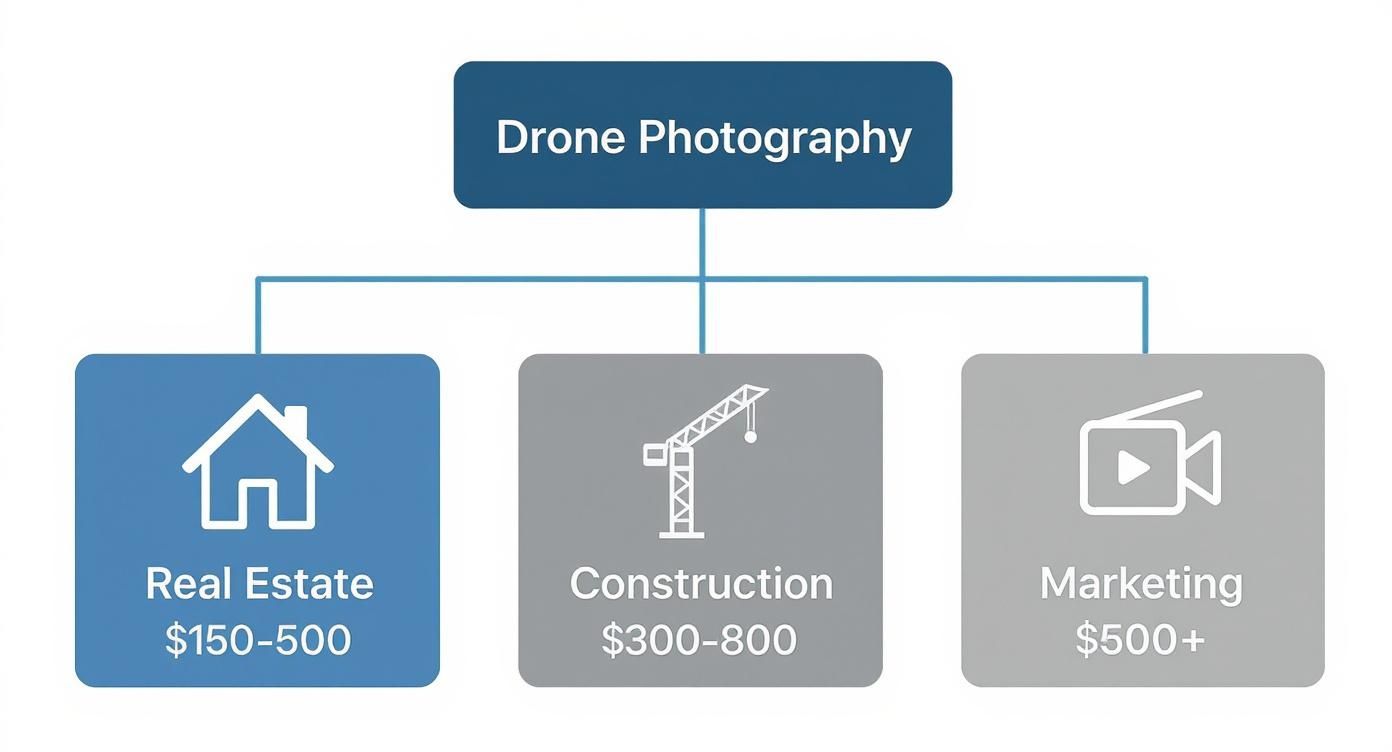
As you can see, real estate projects are a common starting point, but the investment grows for more specialized shoots in construction or marketing, where the demands are much higher.
Let's break down the individual factors.
Pilot Experience and Licensing
A huge chunk of the cost is for the pilot’s expertise, not just their time pushing joysticks. A seasoned, FAA-certified pilot brings more to the table than just the ability to fly. They know how to get stunning, marketable shots while navigating complex airspace rules, ensuring your project is both beautiful and legally compliant.
Sure, a hobbyist might quote you a lower rate, but that comes with a much higher risk of mediocre images, safety mishaps, or even legal trouble. When you hire a pro, you're paying for peace of mind and predictable, high-quality results.
The Quality of the Drone and Camera Gear
Not all drones are created equal. Far from it. A professional pilot has likely invested thousands of dollars in high-end gear that can produce sharp, high-resolution photos and smooth, cinematic 4K video.
- Entry-Level Drones: These often have tiny sensors, which means less detail and muddy-looking shots, especially in anything but perfect daylight.
- Professional Drones: These pack much larger sensors, like those in the DJI Mavic 3 Pro, which capture incredible dynamic range and clarity. The difference is night and day, especially for large prints or premium marketing.
Better gear leads directly to a better final product. That investment has to be factored into the price.
The quality of the final images is directly tied to the drone's sensor and lens capabilities. A professional invests in gear that can handle challenging lighting conditions and deliver files robust enough for extensive editing, ensuring your property looks its absolute best.
Project Complexity and Time On-Site
The scope of the job is another massive factor. A simple shoot of a standard suburban house might only take 30-45 minutes of actual flight time. Easy enough.
But what about a large commercial property with multiple buildings, sprawling acreage, and a list of very specific shots you need? That could require several hours on location. The more time and complexity involved—from planning the flight paths to swapping batteries and capturing a wider variety of angles—the higher the cost. If you're curious about how these service costs compare to other creative fields, checking out articles on understanding production costs for video advertising can offer some interesting parallels.
Post-Production and Editing
Getting the shots is only half the job. Raw photos and video clips rarely look perfect straight out of the camera. They need to be professionally edited to truly pop. This is a skilled craft that includes:
- Photo Editing: Color correction, sharpening, removing blemishes, and fixing perspective distortion.
- Video Editing: Splicing the best clips together, adding background music, creating smooth transitions, and applying a consistent color grade.
A basic package might just cover simple color touch-ups. A premium video package, on the other hand, involves serious editing time to weave the footage into a compelling story that sells the property. The more intensive the editing, the more it adds to the final invoice.
Visualizing Your Budget with Real-World Examples
All the talk about cost factors is great, but what does it actually look like in practice? For a real estate agent, the name of the game is matching your marketing spend to the property's potential payoff.
Let's put some real numbers and services together. Below are three common drone photography packages you'll find in the wild, each built for a different kind of listing. Think of these as a menu—they'll help you see what your budget gets you and connect a price tag to the actual photos and videos you'll use to market the home.

To make it even clearer, here's a side-by-side look at how these packages typically break down.
Sample Real Estate Drone Photography Packages
This table compares three common packages to show how services and deliverables line up with different budgets and property types.
These packages show a clear progression. You start with the essentials to make a standard listing pop, then move up to more immersive video content for premium properties, and finally to comprehensive packages for large-scale assets.
Now, let's dig into what each of those levels really means for you and your listing.
The Essentials Package
This is your go-to for the bread-and-butter listings—think standard homes in a typical subdivision. It gives you the core aerial shots you need to stand out without breaking the bank. It's all about getting that professional, high-altitude look on a modest budget.
- You Get: 5-10 high-resolution, professionally edited aerial photos.
- The Goal: Capture the must-have angles: a straight-down "top-down" shot, front and back views of the house, and a wider shot showing the property's place in the neighborhood.
- Time On-Site: Usually quick, about 30-45 minutes.
This package is the fastest and most effective way to elevate a standard listing. It makes the property feel more substantial and gives buyers a perspective they simply can't get from standing on the sidewalk.
The Pro Storyteller Package
When you're listing a property with special features—a beautiful pool, meticulous landscaping, or a prime spot near a lake or golf course—you need more than just a few static photos. This package is where you start telling a story by combining stills with video.
- You Get: 15-20 edited photos and a 60-second, professionally produced video complete with your branding and licensed music.
- The Goal: Create a cinematic experience that pulls buyers in emotionally and highlights the property's best features.
- Time On-Site: A bit longer, around 60-90 minutes.
This is an investment in creating an emotional hook. It’s perfect for those properties where the lifestyle and location are just as important as the house itself.
The Commercial Showcase Package
For the big stuff—large commercial buildings, new housing developments, or sprawling rural estates—a few pretty shots won't cut it. This top-tier package is designed to capture the full scale and context of a major asset.
This level of service is more than just marketing. It's about delivering crucial visual data and perspective for serious investors who need to see the big picture. The value here justifies the higher price.
- You Get: 25+ edited photos, a 2-3 minute cinematic video, and often the option for raw footage you can use for custom marketing projects.
- The Goal: Cover huge areas, showcase key infrastructure, and provide a detailed overview of the entire site and everything around it.
- Time On-Site: This often takes 2+ hours and may even require a couple of different visits to get the right lighting.
By seeing these packages laid out, you can start to align your marketing strategy with the right level of investment, ensuring you get the perfect visual assets for every single listing.
The True Cost of a DIY Drone Photography Project
Thinking of buying a drone to save a few bucks on your listings? It’s a tempting thought. On the surface, the only cost for drone photography seems to be the drone itself. But the reality is a lot more complex—and expensive—than you'd think.
When you look at it as a business decision, the do-it-yourself route quickly reveals a mountain of hidden costs, both in time and money. Before you can legally and safely capture your first aerial shot for a commercial listing, you have to clear several non-negotiable hurdles. This isn't just picking up a new hobby; it's stepping into the role of a professional pilot.

Unpacking the Hidden DIY Expenses
That initial drone purchase? It's just the tip of the iceberg. A decent entry-level camera drone that’s actually good enough for real estate photography will set you back anywhere from $500 to over $3,000. And the spending doesn't stop there.
To operate legally and produce quality work, you’ll also have to invest in licensing, insurance, and software. These aren’t optional add-ons; they're essential.
Here’s a quick look at what else you’ll be paying for:
- FAA Part 107 License: This is a legal must-have for any commercial drone use. The exam itself runs about $160, but you'll probably want a prep course to make sure you pass, which can add another $300.
- Liability Insurance: Flying without insurance is just asking for a financial disaster. A basic annual liability policy will cost between $600 and $1,000.
- Professional Editing Software: Raw drone photos rarely look great straight out of the camera. Subscriptions for tools like Adobe Lightroom and Photoshop cost around $120 per year.
- High-Quality Accessories: You’ll need more than just the drone. Think multiple batteries ($100+ each), ND filters for those bright, sunny days, and a solid carrying case to protect your investment.
The biggest hidden cost isn't on any receipt—it's your time. Expect to sink 50-100 hours just learning how to fly safely, master the camera settings, and get decent with editing software. Only then will your results be good enough for a professional listing.
The True Bottom Line: DIY vs. Pro
Let's do the math on a first-year DIY setup. A mid-range drone ($1,500), licensing and prep ($460), insurance ($800), and software ($120) brings your immediate cash outlay to nearly $2,900. And that's before you've spent a single minute of your own valuable time.
When you hire a professional, you're not just renting their drone. You're paying for their expertise, their high-end equipment, their insurance, and their polished editing skills—all for a fraction of the cost and none of the headache of a full DIY setup.
For a few hundred dollars, you get immediate, high-quality, legally compliant images without the steep learning curve and major financial commitment. For agents focused on selling homes, the choice is clear. The DIY path is a costly detour, while hiring a pro is a direct route to stunning visuals that help close deals faster. To improve your own on-the-ground shots, check out our guide with helpful real estate photography tips.
How Drone Photography Delivers a Strong ROI
It’s easy to get hung up on the cost of drone photography, but that’s looking at it the wrong way. High-quality aerial imagery isn’t just another line item on your marketing budget. It’s an investment designed to get you a significant return, especially in a crowded real estate market.
Professional drone photos and videos are proven to sell homes faster, attract better offers, and get buyers to actually engage with your listing. It's all about creating an immediate "wow" factor that ground-level shots just can't deliver. The right aerial image can stop a potential buyer mid-scroll, giving them a complete picture of the property's layout, its place in the neighborhood, and the lifestyle that comes with it.
Turning Views into Value
The financial impact of this bird's-eye view isn't just theoretical. Properties showcased with aerial footage see a real jump in interest. In fact, research shows that listings with drone footage can attract over 50% more engagement from potential buyers.
That’s a huge deal. This is where you stop just listing a property and start actually marketing it. The initial investment pays for itself by grabbing the attention of more serious buyers and making your listing the one they remember.
"An aerial shot instantly answers questions a buyer might not even know they have. It shows them the full picture—the yard, the nearby park, the flow of the neighborhood. This context builds confidence and drives action."
Actionable Strategies for Maximizing Your ROI
To get the most out of your investment, you have to be smart about how you use these assets. Don’t just dump them into the photo gallery and hope for the best. Make them the star of the show.
- Create a Powerful First Impression: Use a dramatic twilight or daytime aerial shot as the main "hero image" for your online listing. This is the very first thing buyers will see, and a stunning aerial view makes an unforgettable statement.
- Dominate Social Media: Chop up your footage into short, dynamic video clips—think 15 to 30 seconds—perfect for platforms like Instagram and Facebook. Quick, eye-catching clips showcasing the property's best features are perfect for stopping the scroll and pushing traffic to your listing.
- Tell a Complete Story: A well-produced aerial video tour does more than just show the property; it tells a story. Combine sweeping overhead shots with smooth, low-altitude fly-bys to forge an emotional connection with the viewer.
Integrating these visuals effectively is the key to creating a marketing package that feels cohesive and persuasive. You can learn more by exploring our guide on the best practices for on-brand property marketing materials. By doing this, you ensure your drone photography investment works as hard as possible to attract buyers and close the deal.
Finding the Right Drone Photographer for Your Needs
Knowing what goes into drone photography pricing helps you make a smart hire. The goal isn’t just to find the cheapest option, but to find a pilot who delivers real value for your specific property and marketing plan.
Think of a great drone pilot as a partner in your sale. Before you bring someone on board, you need to vet them to make sure they're qualified, insured, and can actually deliver the high-quality shots your listing deserves. It’s like a pre-flight check for your marketing investment—a few key questions now can prevent some major headaches down the road.
Vetting Your Drone Pilot
When you're talking to a potential pilot, run through this simple checklist. Their answers will tell you everything you need to know about their experience, professionalism, and commitment to doing things the right way.
- Are you FAA Part 107 Certified? This is the absolute first question and it's non-negotiable. Anyone flying a drone for business must have this certification. Don't be shy—ask to see their license.
- Do you carry liability insurance? Accidents are rare, but they happen. A true professional will carry at least $1 million in liability coverage to protect you, the homeowner, and the property. Ask for a certificate of insurance.
- Can I see your portfolio? This is the best way to judge their actual skill. Look for shots that match the style you're going for and pay close attention to the details—image sharpness, color, and how they frame the property.
- What kind of equipment do you use? You don’t need to get bogged down in model numbers. Just ask if their primary drone has at least a 1-inch sensor. This is a good benchmark for high-quality images, especially if the lighting isn't perfect.
A professional pilot will welcome these questions and have all their documents ready to go. If you get any hesitation or vague answers, consider it a huge red flag.
Asking these questions upfront ensures you hire someone who will not only capture stunning visuals but also operate safely and legally. It’s the best way to protect your investment, your clients, and your own reputation.
A Few Common Questions About Drone Photography Costs
Even after you've got a handle on the numbers, a few practical questions always pop up. Let's tackle some of the most common things agents ask when booking a drone shoot.
What Happens If the Weather Turns Bad?
This is a big one. No professional pilot is going to fly their drone in high winds, rain, or thick fog—it’s unsafe and the shots would look terrible anyway.
Your photographer will be watching the forecast like a hawk. If it looks iffy, they'll reach out to you to reschedule. This is completely standard, and you should never be charged a fee for a weather-related postponement. The shared goal is to get amazing photos, and that just can't happen when you're fighting Mother Nature.
How Long Until I Get My Photos and Videos?
Turnaround times can vary, but for still photos, you can generally expect them back within 24-48 hours. This gives the photographer time to handle color correction, sharpening, and other small tweaks that make the images really stand out.
Video is a different beast. It takes more time to edit, sync music, and render the final files. A good ballpark for a finished video is 3-5 business days. Always get this in writing from your provider before the shoot so you know what to expect.
A quick pro tip: If you have a hard deadline for a marketing launch, tell your photographer upfront. That way, they can block out time for your project in their editing schedule and make sure you get what you need, when you need it.
Can I Ask for Specific Shots?
Absolutely! In fact, you should. A good pilot will welcome your input. Before they even launch the drone, give them a simple shot list of the key features you want to highlight.
It could be things like:
- A great shot of the new pool and backyard patio.
- An angle showing how close the property is to the waterfront.
- A direct top-down view to really show off the full lot size.
Giving your pilot a clear list of must-haves ensures you get exactly the marketing assets you need. It’s a team effort, and that kind of collaboration always produces the best results.
At Bounti Labs, we simplify property marketing by turning a simple video into a full suite of MLS-ready photos, descriptions, and AI-powered virtual staging. See how you can create stunning visuals instantly at https://www.bounti.ai.